







It is evident that an IGNOU MCom project looks manageable when students are first introduced to the guidebook. One report, fixed format, limited chapters, with a clear timeframe for submission. Many students assume it will be similar to work that they’ve completed. The confusion starts once the actual work starts.
The majority of issues in projects are not about intelligence or work. They are caused by small, but repeated mistakes that slowly make the project less effective. These mistakes are typical easily avoided, and predictable. However, every year thousands of IGNOU MCom students repeat them with delays or revisions.
Recognizing these errors early could save time, cash, and stress.
Choosing a topic without checking practicality
One of the earliest mistakes is at the topic choice stage. Students select topics that sound intriguing but aren’t very easy to master.
Certain subjects are too vast. Some require information that is not accessible. Some rely upon organizations that refuse to give permission. Later on, students might reduce their scope by accident or struggle to justify their weak data.
A great MCom topic for a project is not about the complexity. It’s about how feasible. It must match the available time, data access, and knowledge of students.
When deciding on a topic students must ask a simple question. Can I really complete this with the resources I have.
Setting vague objectives that orient you to do nothing
They are designed to guide the project in its entirety. When it comes to many IGNOU MCom projects, objectives have been written merely to fill the space.
Students write general statements such as to investigate impact or review performance without delineating the specifics of what will be studied. These objectives do not help in determining a methodological approach or analysis.
If the goal is unclear, every chapter can be a bit confusing. Data collection feels random. Analysis lacks direction.
Clear objectives act like maps. Without them, even excellent data can feel stale.
Treating literature review as copied content
Another mistake made frequently is copying literature review material from web page pages, old projects or online repositories. Students believe that long literature review means strong project.
IGNOU examiners seek understanding rather than volume. They want students to be able to relate earlier studies with their current research.
A literature review must explain what research has already been done and explain how the present project does. The lack of explanation for studies listed shows lack of engagement.
The act of phrasing text without understanding can increase the likelihood of plagiarism, even when students aren’t planning to copy.
Poor explanation of methodology
The methodology area is where students have a moment of panic. They’re certain of what they’ve done but they are unable to articulate it academically.
Certain chapters in methodology copied from other projects, but do not match it with their own work. This creates mismatch between objectives as well as data and methodology.
The methodology should describe why a approach was chosen, as well as how data was collected, and how analysis was carried out. It does not need complex terminology. It requires clarity.
A simple and straightforward method is always superior to any complicated copy and paste one.
Data collection isn’t relevant
Students can collect data since it’s accessible but not to meet objectives. Surveys are conducted without proper planning. The questions are not linked to research goals.
Later on, during analysis, students struggle to interpret results clearly. Charts are nice, but conclusions seem forced.
Data should benefit the project and not be used to embellish it. Every question asked should connect with at least one purpose.
Effective projects utilize less data however, they are able to communicate it clearly.
Unfair interpretation of results
Lots of IGNOU MCom projects include tables and graphs but do not explain what they do. Students assume numbers speak for themselves.
Examiners expect interpretation. What do these numbers mean. Why is this important. How does it relate to objectives.
It is not an interpretation. Interpreting meaning is.
An insufficient interpretation makes the whole analysis chapter feel empty.
Doing nothing to comply with IGNOU format guidelines
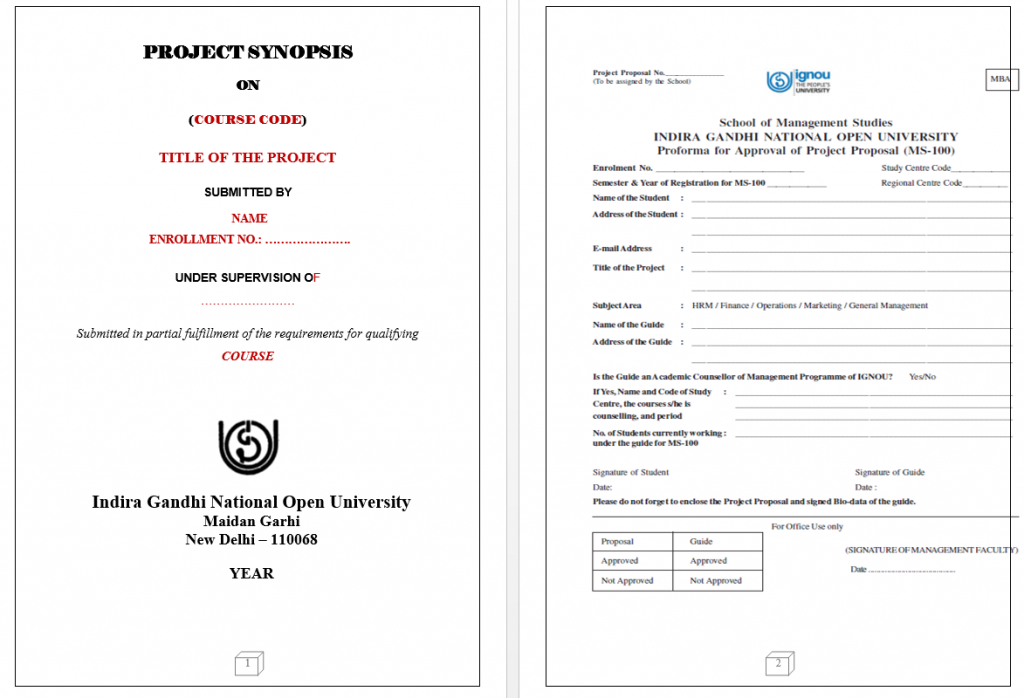
A few mistakes in formatting can be costly. The wrong font size, the incorrect spacing, missing certificates, or an incorrect chapter sequence can cause problems with submission.
Some students make corrections only when they are done, which can lead to mistakes that are made rushed.
IGNOU style guidelines must following from beginning. This helps save time and eliminates panic at the last minute.
Good formatting also makes the project easy to understand and assess.
Aiming too fast at the end of the chapter
The concluding chapter is often written in a hurry. Students write chapters in a way that is not presenting findings.
A strong conclusion explains the results of research, not the words written. It should be able to link findings with objectives and suggest practical implications.
A lackluster conclusion makes the book feel like it’s not complete, even in the case of good chapters earlier on.
Do not rely too heavily on those last minute fixes
Many students delay project work thinking they can complete the work in a short time. Research writing is not able to work that way.
Writing in the last minute leads to error-prone writing, weak analysis, and formatting problems.
Steady progress with small milestones reduces pressure and improves quality.
Fear of asking for something
Some students hesitate to seek help. They believe asking questions is a sign of the weakness of their students.
However, all academic endeavors require supervision. Mentors, supervisors, and academic support all have reasons.
The early identification of doubts can help avoid costly errors later.
Looking for help with the project ignou to get a better understanding of the project’s structure is not unethical. It’s practical.
A misunderstood understanding of the academic aid
There is a lack of clarity between guideline and unjust practice. A moral academic guidance system helps students better understand the expectations, improve their English and structure work.
It doesn’t record data or write content.
Students who are guided often have better understanding of their projects and are more confident during evaluation.
Reviewing the project in its entirety. part of the overall project
The students often study chapters by themselves, but never go through the entire work as a single document. This leads them to repeat the same chapter, resulting in inconsistent, and an inconsistency.
Examining the whole project one time will uncover any mistakes or gaps that otherwise would be missed.
This small step can improve overall coherence dramatically.
The value of learning to avoid these mistakes
Averting common errors does more than guarantee approval. It helps students comprehend the fundamentals of research.
The MCom project is often the first experience in research. Achieving it in a professional manner builds confidence for the future.
Students who have learned about research discipline during MCom do better both in their professional and higher-education job.
A real thought for closing
IGNOU MCom projects do not fail because the students aren’t able. The reason they fail is that students are unaware of expectations.
Most mistakes are comprehensible and they are easily prevented. Be aware, plan as well as guidance can make a major difference.
If students are focused on clarity and not complexity and complexity, projects become more simple in completing and easier to be approved.
This is the way IGNOU MCom projects should be handled, with a calm, practical approach in the right way, and with knowledge.



